The Rebrand That Didn't Save Betts

Last week, Betts announced it would close 20 of its 35 remaining stores after entering voluntary administration. The Western Australian footwear brand has been trading for 134 years, and for most Australians it means one thing: black school shoes, bought in a shopping centre, probably under mild protest in the last week of January.
Here's the part that should give every brand founder pause. Betts didn't fail because it neglected its brand. Nine months before the administrators walked in, the business relaunched with a full strategic repositioning led by Jessica Hatzis, co-founder of Frank Body and one of the sharpest brand minds in the country. Sub-labels were retired, the range was streamlined into a consolidated women's offering, and the brand's Australian heritage story was brought to the forefront. The work was widely admired. Marketing podcasts dissected it as a case study in doing a rebrand properly.
And it still wasn't enough.
That's because a rebrand, however intelligent, is a communication exercise. It changes how the market sees you. It cannot change the structural realities underneath: falling foot traffic, retail conditions the administrator described as simply not sustainable, and a customer base that had drifted away over years, not months. By the time Betts repositioned, it had already shrunk from nearly 220 stores at its peak to 35. The tidal wave had been visible from the shore for a decade.
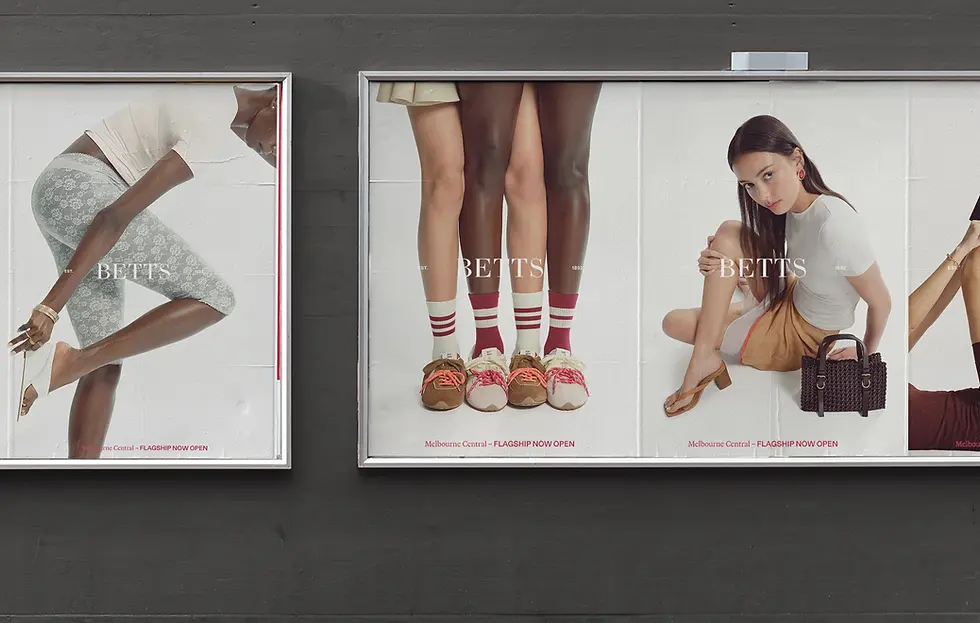
The lesson isn't that rebrands don't work. It's that they work in a specific order. Innovation in the core product, relevance to where the customer is actually heading, and the willingness to disrupt your own model before the market does it for you all come first. The visual identity, the tone, the new colourway sit on top of those foundations. When the foundations are sound, a repositioning accelerates growth. When they've eroded, it becomes a beautifully designed press release for a business that's already taking on water.
There's a version of this playing out in professional beauty right now, and it's worth naming. Brands watch their salon and clinic partners struggle, watch stockist numbers soften, watch reorder frequency stretch out, and respond with a refreshed logo, new packaging, or a repositioned Instagram grid. The instinct is understandable. It feels like action. But if the product pipeline hasn't moved in three years, if the education offer looks the same as it did pre-pandemic, and if the brand hasn't asked what its stockists actually need to grow, then no amount of design work will change the commercial trajectory.
Betts is a reminder that market sentiment doesn't announce itself politely. It shows up in the data long before it shows up in the headlines, in slowing sell-through, in customers who love you nostalgically but shop elsewhere practically. The brands that survive are the ones reading those warnings early and moving ahead of them, adjusting product, channel, and positioning while there's still runway to do it. Reacting once the ship is listing means every decision gets made under pressure, with less money, and with fewer options on the table.
If you're leading a brand in the professional channel, the question to sit with isn't whether your logo still feels current. It's whether you truly understand how the industry is trading right now, where salons and clinics are spending, and what's driving the decisions of the people who stock you.
That's exactly what our H1 Industry Report covers: the real numbers and sentiment shaping professional hair and beauty for the rest of 2026, drawn from the operators and brands inside it. Download it, read it against your own performance, and make your next move an informed one rather than a reactive one.


A rebrand is only as successful as the operational changes that support the new vision. When a company fails to align its internal culture with its public image, the disconnect becomes apparent to everyone. Relying on nostalgic competitive browser games can serve as a reminder that staying true to one's core identity is more important than chasing trends. Authenticity remains the most reliable foundation for any lasting brand.